BlogIdeas
What happens to my saved stuff when an app shuts down?
Usually you get a few weeks to export, then it's deleted. What Google Reader, Omnivore, Yummly, Pocket and Arc users got, and how to keep a copy no company can switch off.
 Benaiah, founder3 min read

Cover art by Pixeljad
You usually get a few weeks or a few months to export, and then your saves are deleted. Pocket gave people three months after it closed, and Omnivore gave about two weeks. Anything you didn't export in time is gone.
What five shutdowns gave their users
| App | Closed | Time to get your saves out |
|---|---|---|
| Google Reader | 1 July 2013 | Export through Google Takeout until 15 July 2013 |
| Omnivore | 15 November 2024 | About two weeks after the announcement |
| Yummly | 20 December 2024 | Little; there was no easy way to export a whole recipe box |
| 8 July 2025 | Export until 8 October 2025, then everything was deleted | |
| Arc | 22 December 2026 | Until Arc stops; after that it won't open |
Sources: Google Reader, Omnivore, Yummly, Pocket, Arc.
Paid accounts were deleted too
Pocket had a Premium plan, and many people paid it for the permanent copies of articles. Yummly had paying members as well. When each app closed, the paid accounts were deleted along with the free ones.
"I was a paid subscriber to Yummly … Lost everything."
u/rogerklarvin on r/Cooking, September 2026
"the main reason I paid for Pocket was the archiving of articles"
uxcolumbo on Hacker News, May 2025
When TikTok went offline
When TikTok briefly stopped working in the United States in January 2025, people worried about their saved recipes:
"All those recipes I had saved just gone"
@YoGfsFavoritee on X, January 2025, 95,000 likes
TikTok came back the next day, and so did the saves.
How to keep your own copy
- Export now, while it's easy. Most apps have an export somewhere in their settings: Instagram's is Download your information in Accounts Centre, Google's is Takeout, and Chrome exports your bookmarks from its bookmark manager.
- Prefer apps that keep files on your own device. There's a name for this, local-first software, from a 2019 essay by Ink & Switch: your data lives on your device first, and the cloud is only how it syncs. An app built this way can close and your library stays with you.
- Keep your exports in a folder you control, like iCloud Drive or Google Drive, as well as in the app that made them.
- Export again twice a year, because an old export won't have what you've saved since.
How Cavvi handles this
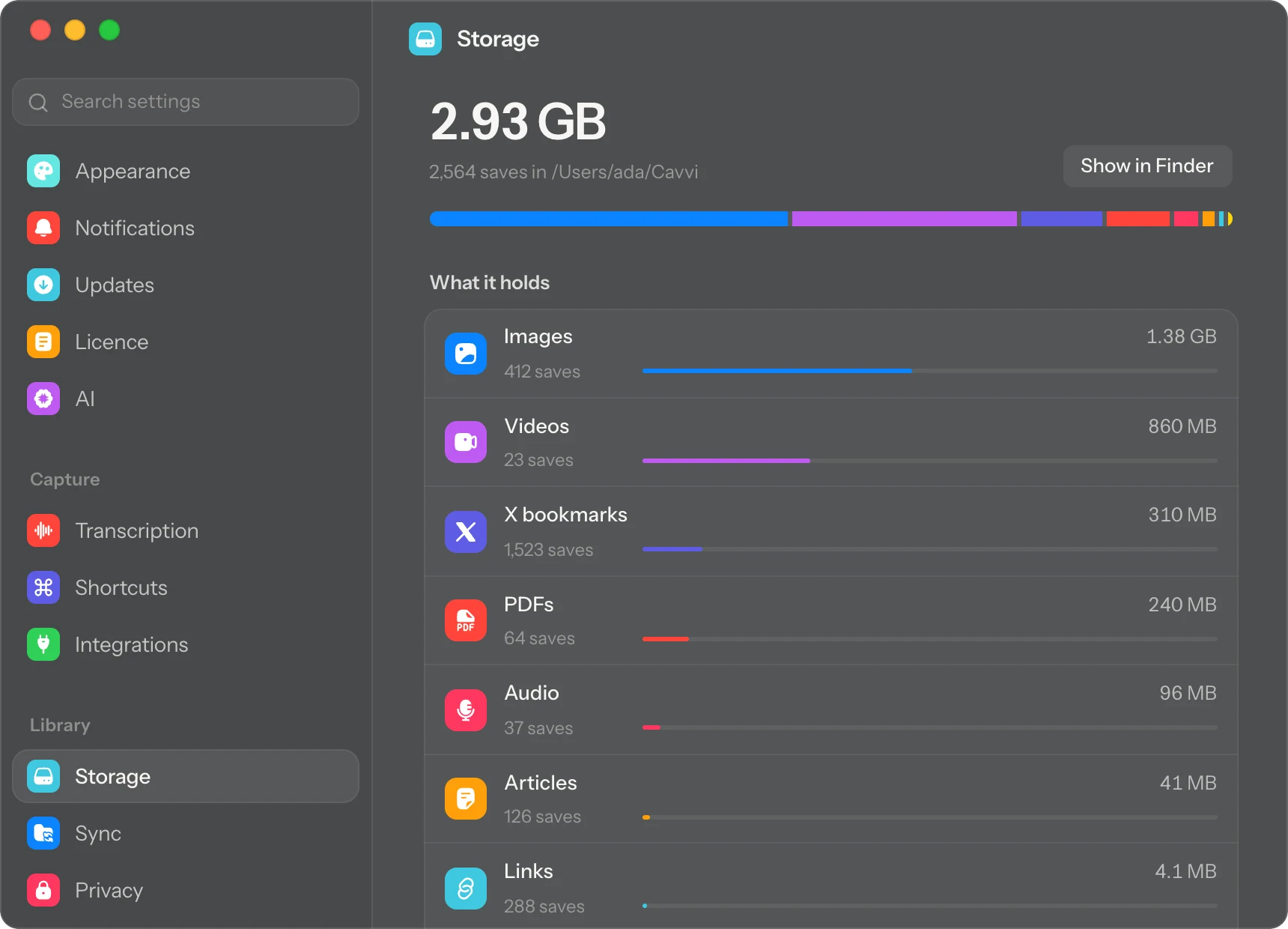
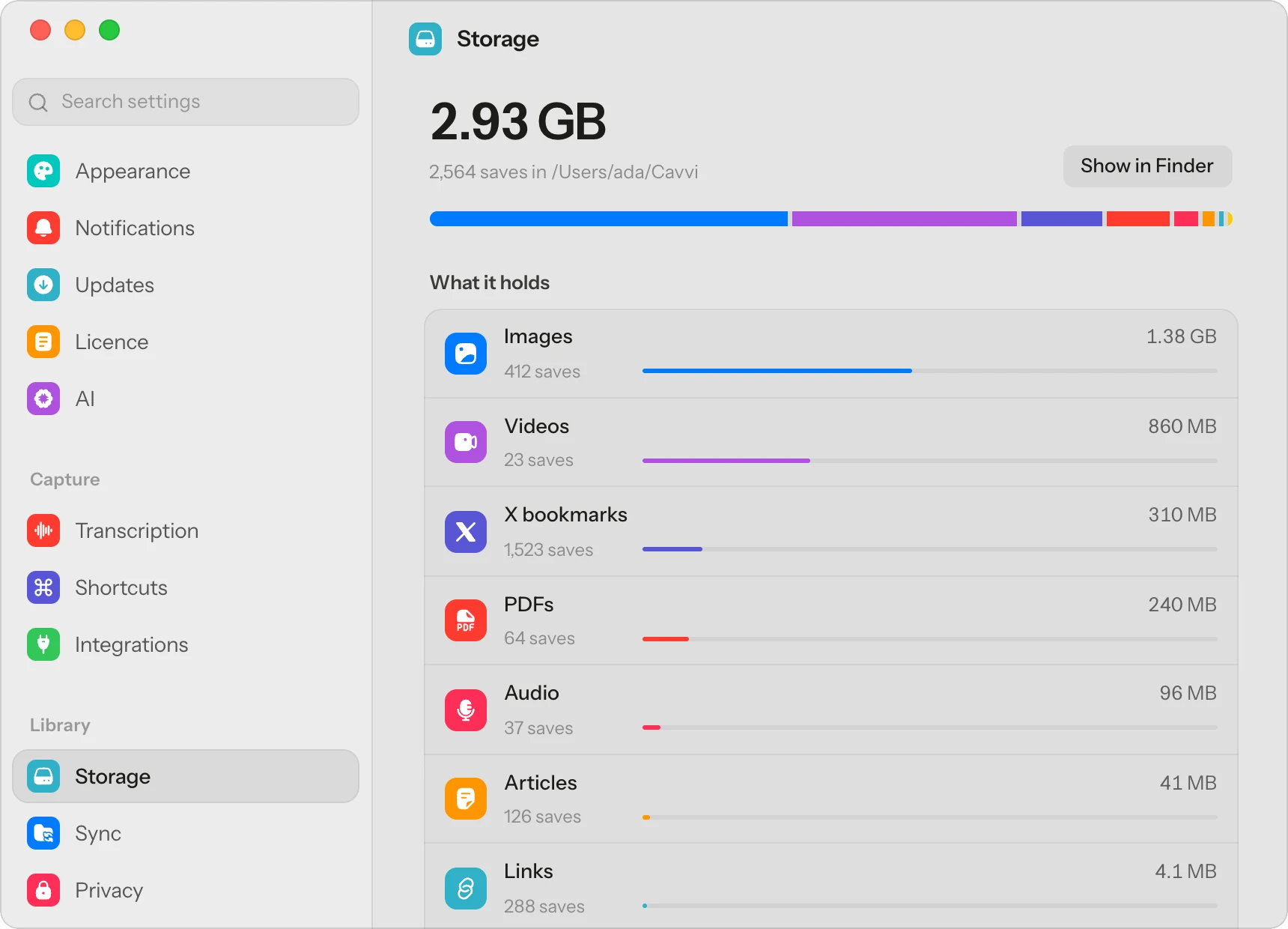
I make Cavvi, and like any app it could close one day. That's why your library is a folder of ordinary files in your home folder on the Mac. Nothing you save is kept on Cavvi's servers, there's no account to switch off, and Time Machine backs the folder up with everything else.
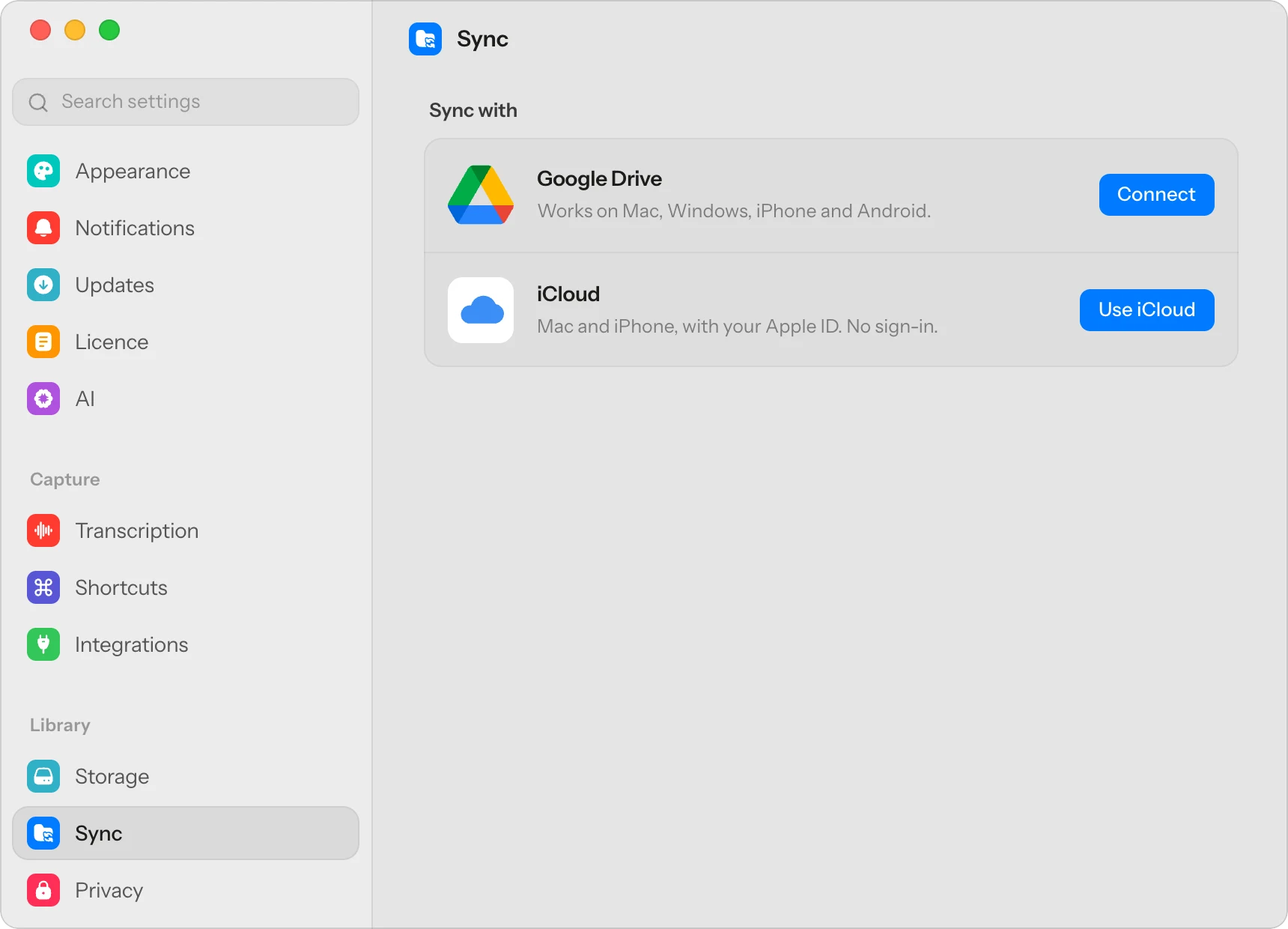
Sync runs through your own iCloud Drive or Google Drive, so your iPhone and iPad keep their own copy too. Your library never passes through our servers.
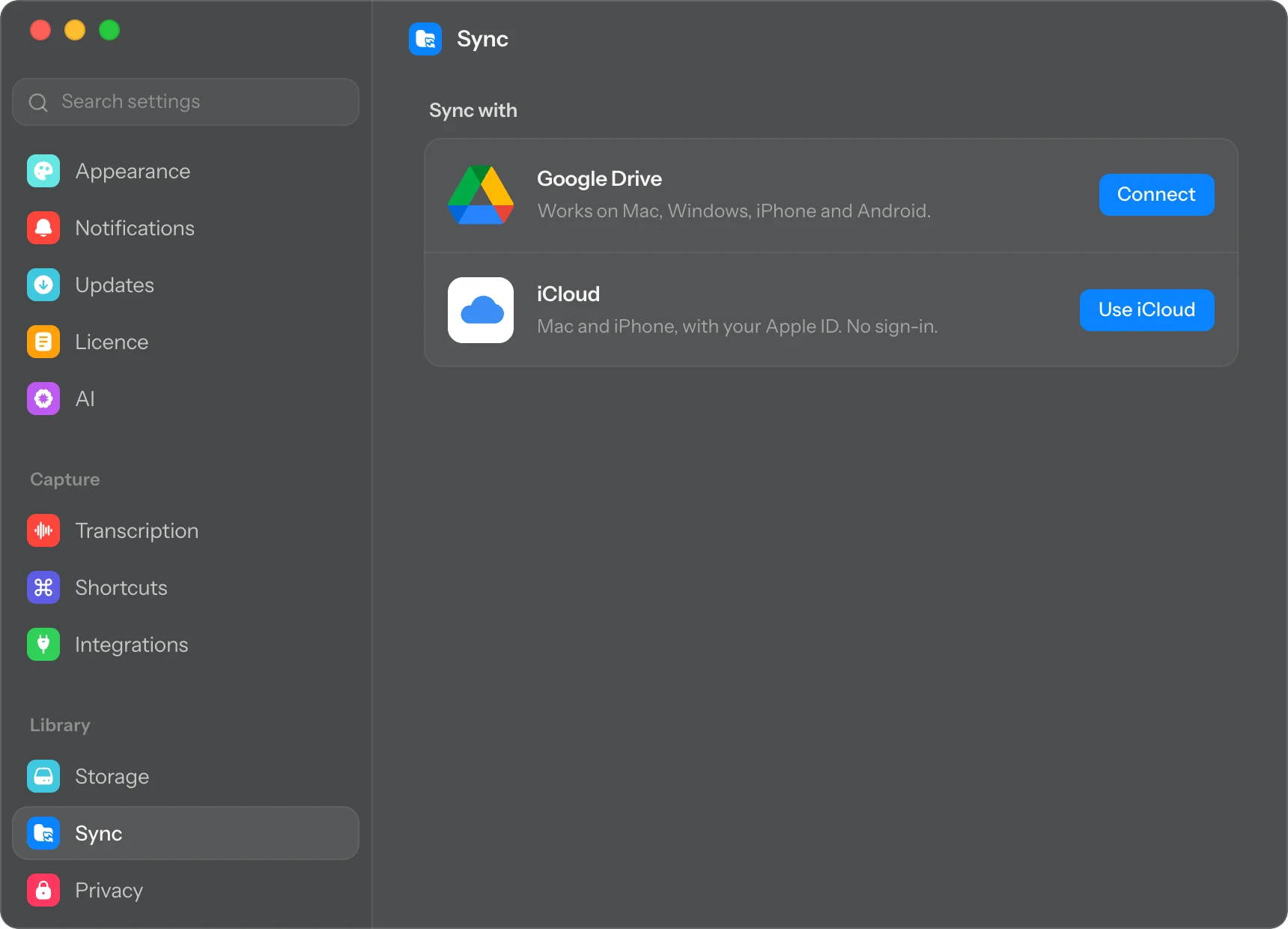
If you ever stop using Cavvi, the folder stays where it is and the files open in ordinary apps. See Where your library lives. Every device starts with 10 free saves, then Cavvi is $39 once.
Questions
Can a company delete my data when it shuts down?
Yes. Most give notice and a window to export, then delete everything. Pocket deleted all its users' data three months after closing.
How do I back up my data from an app before it closes?
Look for Export or Download your information in the app's settings, then keep the file in a folder you control. Do it early, because export windows can be short.
What happened to Pocket?
Mozilla closed Pocket on 8 July 2025. Exports stayed open until 8 October 2025, when all Pocket data was deleted.
What happened to Omnivore?
Its team joined ElevenLabs, and the app shut down on 15 November 2024, about two weeks after the announcement.
What is local-first software?
Software that keeps your data on your own device first and uses the cloud only to sync. If the company behind it closes, your data stays with you.
Keep reading

Ideas
Too many saved TikToks? Why you never go back, and a fix
In one study, only 16% of bookmarked pages were found again through bookmarks. Why saved TikToks and reels pile up, and a 20-minute weekly fix.

Ideas
What is a second brain? A plain-English explanation
A second brain is a place outside your head where what you save comes back when you need it. What that means, what it isn't, and where AI fits.

Compared
Best bookmark manager for Mac in 2026, compared
Raindrop, Anybox, GoodLinks, Linkwarden and more compared on price, pay-once options, offline use, search and phone apps. Prices checked November 2026.